Today, As in the Past, the Maccabiah Is About Jewish People and Unity
· Jul 14, 2026
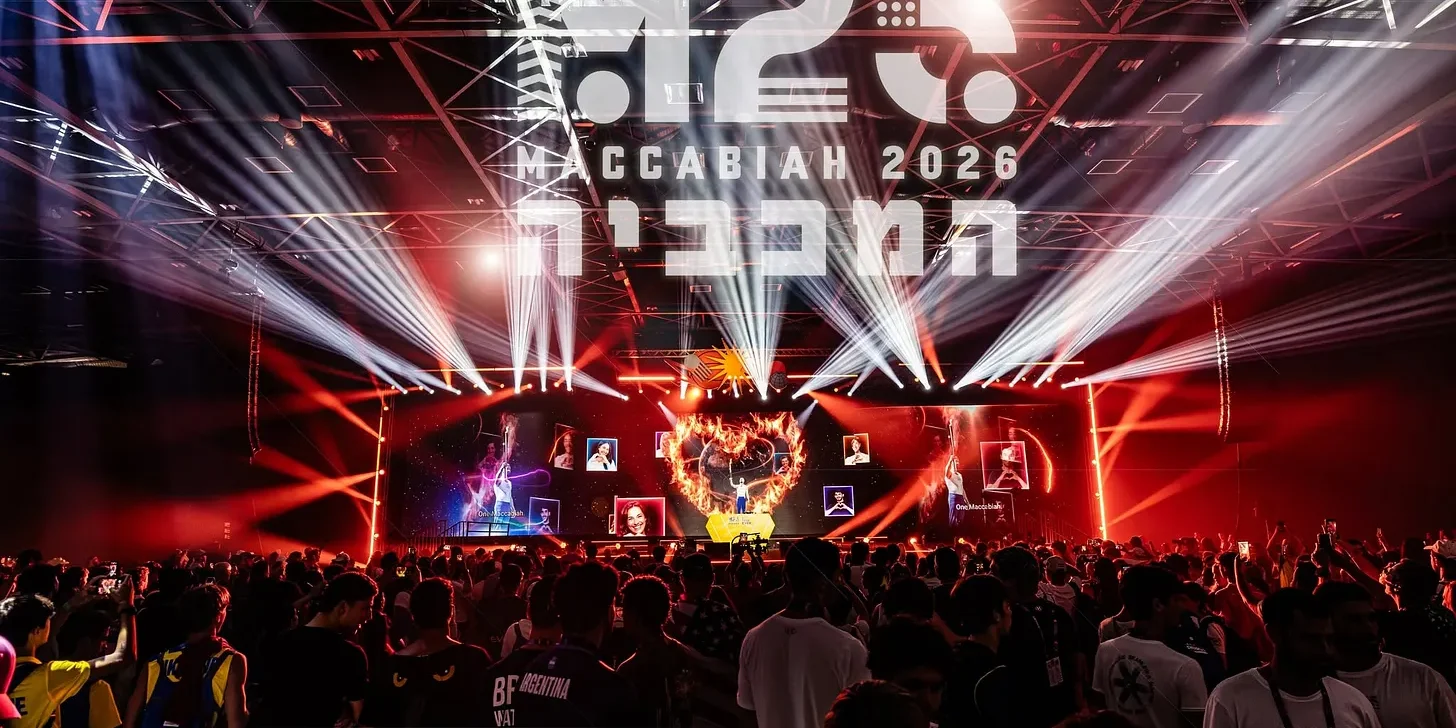
Last night marked the closing ceremony for the 2026 Maccabiah Games. On July 1, 10,000 athletes arrived in Israel from around the world to take part in the 22nd Games, a historic Jewish sporting tradition dating back to 1932. For the opening Shabbat dinner, I was invited to speak to a VIP group from Maccabi USA. Wearing my old Maccabiah uniform from 50 years before (it still fits!), I proudly told them the following:
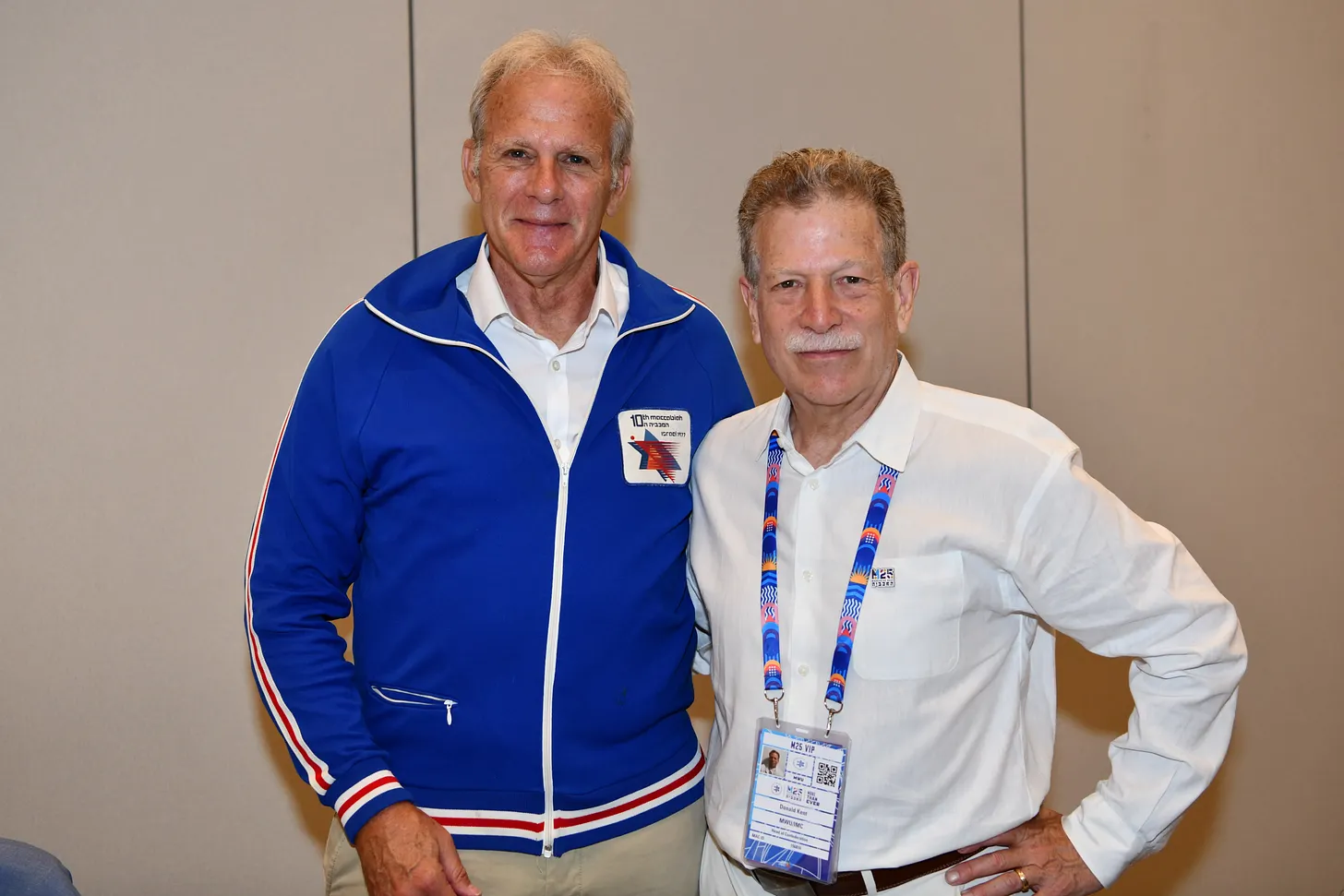
July 3, 2026 — Tel Aviv
I am honored to be talking to you, the supporters and senior staff of the 22nd Maccabiah Games. I’m delighted to speak about my experiences as a participant in the 10th Maccabiah Games – it seems incredible to think that it was nearly a half-century ago.
I grew up in a small New Jersey town where I was the only Jewish kid in the neighborhood and would get beaten up for being Jewish. I’d come home with a black eye and bloody nose, and my father, a veteran of World War II, had pictures of a concentration camp that the GIs had liberated. He would show me those photos and say, “You see that kid? That’s why we need a strong state of Israel.” From a very early age, I knew that somehow I would go to Israel. I would save up all year long mowing lawns, shoveling snow, and raking leaves to spend my summers on the kibbutz working for free.
When I was eighteen, I faced a dilemma – should I stay in Israel and immediately join the army or should I return to the United States and first go college? I’d just gotten into the university of my dreams and reached the conclusion that the army could wait. I would complete the four years of my bachelor’s degree.
The question then arose – how could I stay in shape during those four years and be ready to try out for the paratroopers? Up until that point I had never been much good at sports (I have the hand-eye coordination of a bat). Back then, there were really only three American sports you could play – basketball, baseball, or football. I certainly didn’t have the coordination for basketball or baseball. As for football, all I could play was offensive tackle, which meant I’d be little more than a punching bag.
In the process I discovered I had three qualities of which I was not previously aware. Firstly, I had great endurance – I simply didn’t get tired. Secondly, I had very strong legs. Thirdly, I had a natural rhythm. Tell me to row at twenty-four strokes, and I’ll row at twenty-four strokes. Tell me thirty-two, I’ll row thirty-two. I had an internal clock, which made me perfect for the sport of rowing.
I tried out for the crew, made the varsity, and trained. Now, crew is the most insane sport of all. You train for six, seven, even eight hours a day. You run marathons in order to row crew. The races usually last about seven minutes. Each one, however, begins with a sprint, so after the first ten seconds you basically have no oxygen and run the rest of that race purely on muscle and determination. More than anything, it’s psychological. That was crew. I figured if I could row, I’d be good enough to get into the Israeli paratroopers.
Approaching graduation during my senior year, I got a note announcing the upcoming 10th Maccabiah Games in 1977. There would be no better way to inaugurate my life in Israel than participating in the competition.
By then, I was no longer rowing varsity so I started doing my own training. I took a loft, strangely enough, in a chapel in New York. It was a bedroom upstairs with one bed. Every day, I’d get up at four o’clock in the morning and do a rowing workout. I had hired an Israeli coach to teach me how to scull, because I had only rowed with one oar before, not two. After that, I’d come home and have a breakfast of bonemeal, raw egg, and chocolate. By noon, I’d do another major weight workout, and in the evening, I’d run at least ten miles. This went on for weeks and weeks on end.
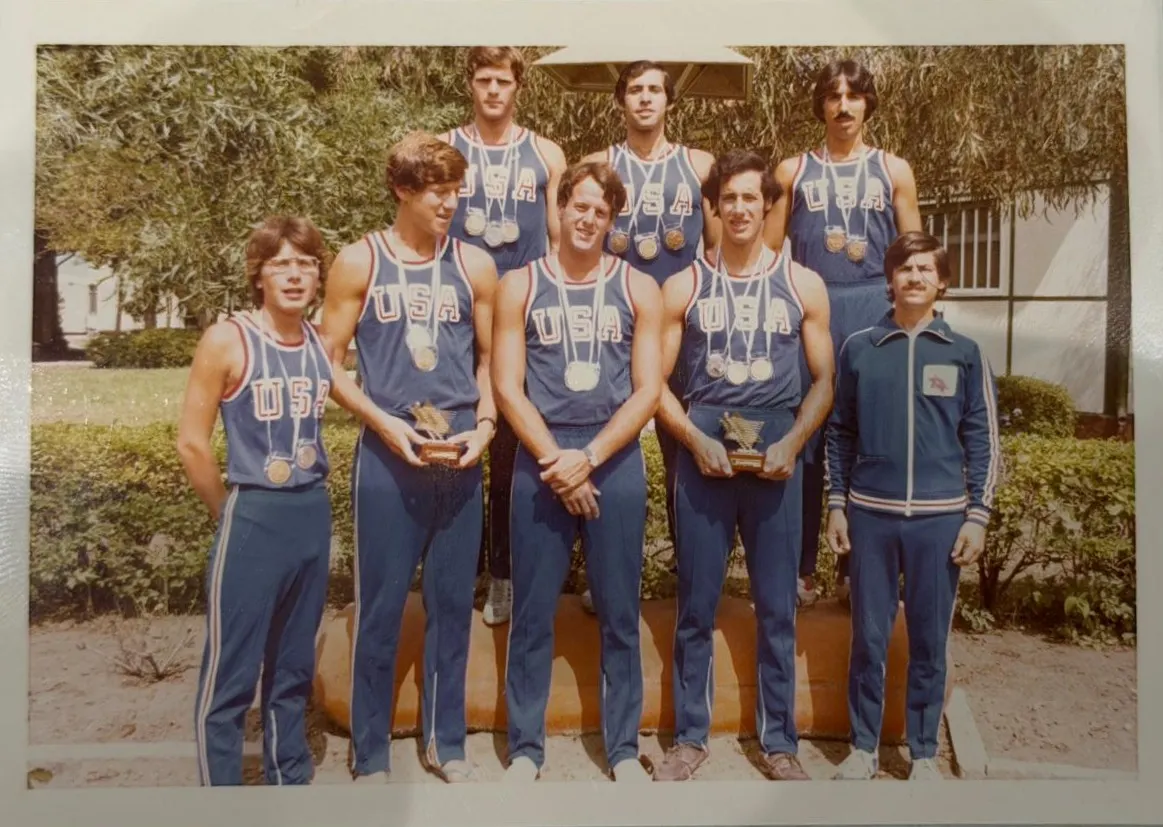
The tryouts were held at Dartmouth College in New Hampshire. There were the same trials as those for the Olympics so we tried out for the Maccabiah and the Olympics at the same time. I almost made the Olympics, but the coach said that even though I had done very well, I was too short (at six feet two and a half – too short!). But I did make the Maccabiah team and became the stroke. It was a great team – some of the finest oarsmen I ever encountered. They were truly, truly excellent oarsmen.
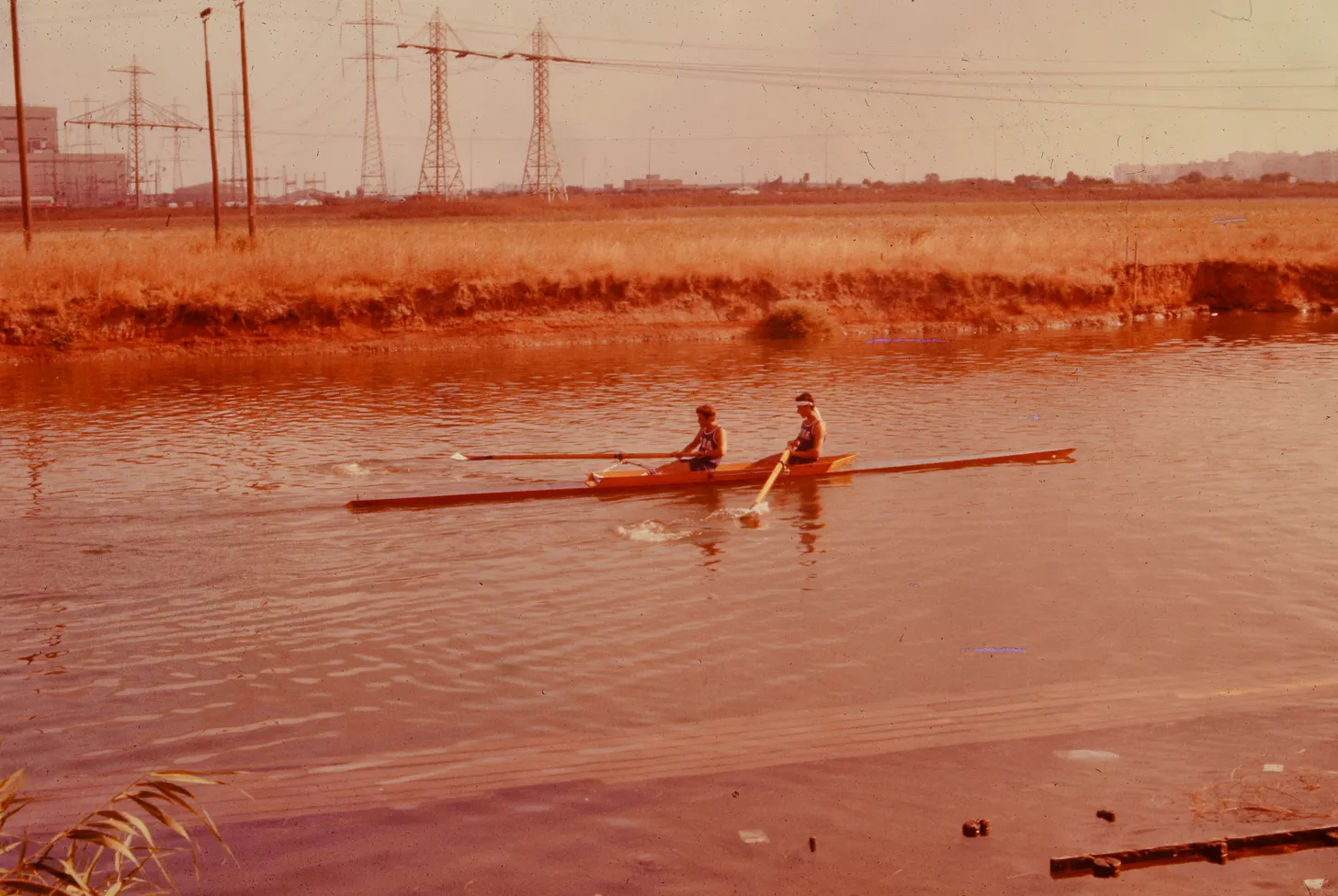
In the summer of 1977, we went to Israel to compete. We were kind of in a league of our own – we won two gold medals. We were on the verge of getting our third gold, just 100 meters short of the finish line, when the boat that the Israelis had given us – and these were wooden boats back then, not carbon fiber – simply fell apart in the middle of the Yarkon River. We sat there while the Argentinians passed us and won, leaving us without the third gold medal.
But the medals were not what was important about that Maccabiah.
We forget that 1977 was a very painful year for the State of Israel. It was four years after the traumatic Yom Kippur War, in which, in three weeks, the state of Israel suffered more fatalities than we have in the past three years, in a population that was less than a third of what it is today.
After the 1974 Arab oil embargo, almost every African country cut off relations with Israel. We had very few ties with South America, none with China, India, and the twelve Soviet Bloc countries. Three million Jews were trapped behind the Iron Curtain. If they even studied Hebrew, they would be sent to the Gulag in Siberia. We had no peace with Egypt, no peace with Jordan, certainly no Abraham Accords.
We had a friendly relationship in the United States, but not a strategic alliance. Israel was totally isolated, fifty percent of our GDP went to defense, and the country was impoverished.
We rowed at a time that was very depressing for Israel. Even the Yarkon back then was lined with brambles, weeds, and garbage. The water was toxic.
Then, almost suddenly, things began to change. Israel won the European basketball championship, defeating the theoretically unbeatable Soviet team. We even won Eurovision that year. In November 1977, Anwar Sadat, president of Egypt, arrived in Tel Aviv, beginning what became known as the Camp David peace process. Everything turned around in 1977.
It is an important lesson for us today. Right now Israel and the Jewish people are experiencing extreme difficulties. Relations with many countries are strained if not severed and even our ties with the United States are facing unprecedented challenges. Antisemitism has skyrocketed worldwide.
What I learned from the Maccabiah in 1977, was that if Jews come together, and if we are united, we can overcome any difficulties and turn situations around. The Maccabiah was about sports, yes, medals, certainly, but above all it was about Jewish athletes coming from around the world and celebrating Jewish peoplehood. It was that lesson that I carried with me throughout my life in Israel, in my career as a public servant and as a soldier. The Maccabiah has always remained for me a source of great inspiration and a model of what we can once again aspire to achieve.
1977 was a low point. Today we are again at a similar nadir. But if we can achieve the kind of unity that young people and athletes experience at the Maccabiah, we could once again make 2026 into 1977, to replicate that great achievement. And for that, I want to thank you all. Each and every one of you deserves a gold medal.