American Bases in Israel: Pros and Cons
The United States has a fundamental interest in relocating its Middle East bases to the Jewish State. But does Israel?
· Jul 07, 2026
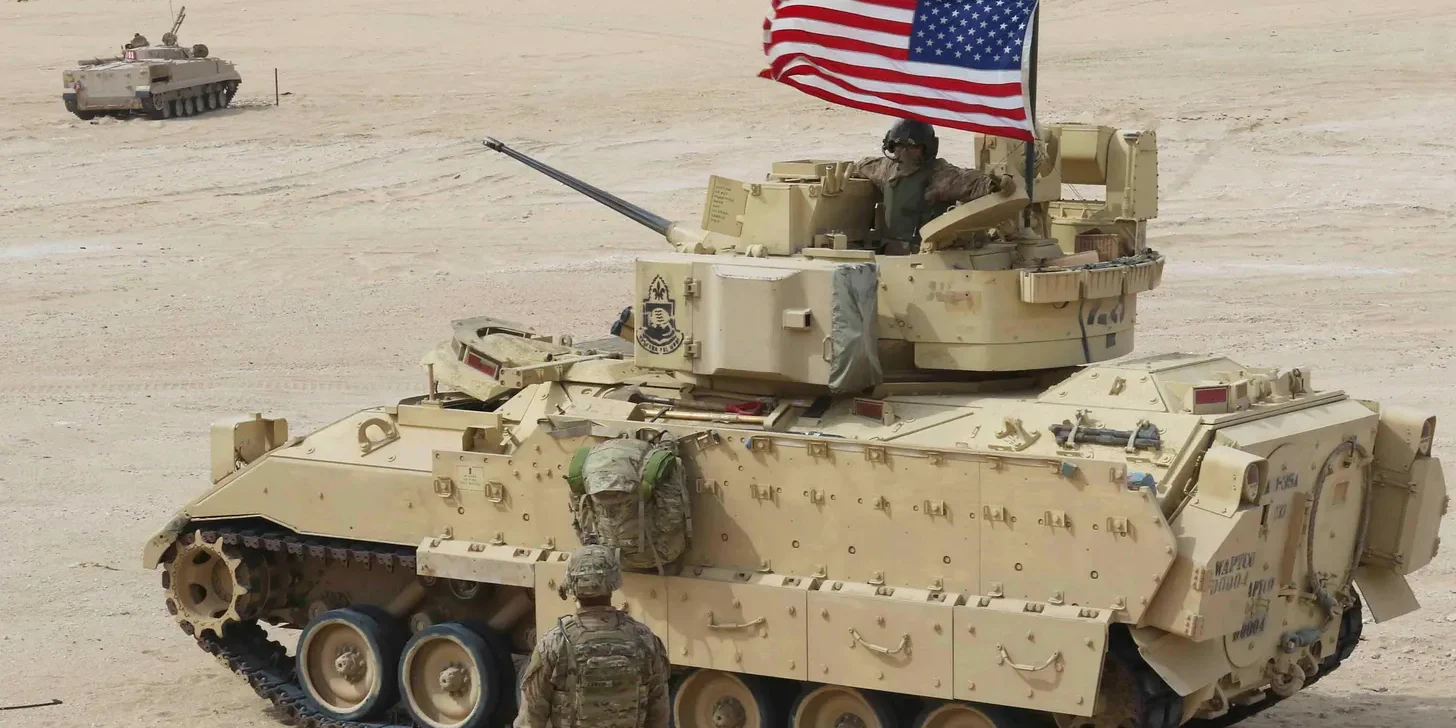
The American media last week was filled with reports of discussions within the Pentagon about whether to move U.S. bases out of the rocket range of Iran. At stake was the future of major navy and air force installations in Kuwait, Bahrain, the United Arab Emirates, Saudi Arabia, and Qatar—countries lacking effective anti-missile defense systems. In addition, during the recent war with Iran, Saudi Arabia refused to allow American warplanes to use its airspace. The absence of such a protection proved immensely costly during Operation Epic Fury/Roaring Lion when the Iranians fired hundreds of missiles at these bases, causing extensive damage. Pentagon officials are now debating whether to transfer the bases to another country, perhaps Israel.
Clearly, the United States has a fundamental interest in relocating its Middle East bases to the Jewish State. In addition to its proximity to Iran and other regional adversaries, an exceptionally high level of technological support, a familiar culture, and an inherently pro-American population, Israel has the world’s most advanced, multi-layered anti-missile defense. During the “English language war,” as our pilots liked to call it, American forces served side-by-side with their Israeli counterparts. Not since its alliance with Britain in World War II has the United States cooperated so intimately with any foreign power. Israel today, Pentagon policymakers know, is the only country in the world willing to fight alongside the United States as a full and, in many ways, equal partner.
The American interest is obvious, but is Israel’s? The construction of U.S. bases in the country will certainly create hundreds of jobs for Israeli workers and infuse our economy with many millions of dollars. Strategically, it will further strengthen ties between our two armies and preserve Washington’s commitment to our qualitative military edge and national security. Israel’s enemies might think twice before striking a country that hosts hundreds of advanced U.S. warplanes, naval vessels, and intelligence centers. But along with the advantages of building American bases in Israel come significant costs and risks.
As our neighbors in the Gulf painfully learned, the presence of such installations in their countries did not enhance their security but compromised it by drawing Iranian missile fire. The rows of U.S. fueling planes lined up wing-to-wing at Ben Gurion Airport present an attractive and convenient target for Iran—even more than Israel currently represents. Most problematic for Israel, though, would be a situation in which American leaders limit our ability to defend ourselves with the claim that doing so would endanger U.S. forces stationed in the country.
Beyond the strategic arguments against hosting American bases are the political trends unfolding inside the United States. Should the Democrats regain control of Congress and the White House, or the isolationist, anti-Israel wing of the Republicans come to dominate their party, not only is military aid to Israel likely to be cut but also other security ties. With a Progressive president sitting in the Oval Office, we can justifiably ask, what would be the future of any American base in Israel?
In many ways, the question of whether to invite the U.S. military to reside permanently in Israel is not new. In the first years after independence, Israel actively sought membership in the Middle East Defense Organization (MEDO), a pro-Western, NATO-like alliance, only to be turned away by the Eisenhower administration. A similar negative response was received for Israel’s attempts to join the Baghdad Pact, formed in the mid-1950s around the Northern Tier countries of Iraq, Turkey, and Pakistan. More recently, shortly after its election in 2022, the Netanyahu government purportedly gave serious consideration to signing a mutual defense agreement with the United States. That discussion was cut short, brutally, on October 7, 2023.
I always opposed such a treaty and, even after October 7, still do. It would compel Israel to send troops to defend America should it again engage in a foreign war while potentially restricting our latitude in defending ourselves. U.S. troops have served in Israel in the past—manning Patriot missile batteries during the First Gulf War and X-Band radar installations thereafter—without a formal legal framework. Forging one now will entail more drawbacks than advantages.
So, too, today, I would urge Israeli leaders to think long and intensely before agreeing to a U.S. request for permanent bases. At this point in time, when we do not know what, if any, agreement will emerge from the Memorandum of Understanding between the United States and Iran or the future relations between CENTCOM and the IRGC, the shortcomings of American bases in Israel outweigh their advantages.
This does not mean that we should cease efforts to strengthen our military ties with the United States. We can replace the aid we receive from Washington with close cooperation in cyber, laser, intelligence, and other mutually crucial areas. Our forces can still train together and our engineers can proceed with developing the world’s most advanced military technologies. American military aircraft can continue to utilize Ben Gurion Airport, hopefully without causing more of the civilian aviation delays that are already vexing Israelis.
Source: Clarity with Michael Oren