South America Is Changing: Why That’s Good News for Israel and the Jews
The situation for Jewish communities in the Diaspora has seemed hopeless. That’s what I believed until I visited South America.
September 4, 2026
In my capacity as head of the Israel Advocacy Group, an organization I founded on October 8, 2023, to help defend Israel in the diplomatic arena and in the media, I’ve met with Jewish leaders around the world. The conversations were always depressing—and sometimes worse. In Australia and Canada, home to well-established and successful Jewish communities, I heard grave doubts about their communities’ futures. In Western Europe, and for the first time even in the United States, Jewish leaders openly wondered whether Jews could continue to live safely. In every case, the sharp rise in antisemitism and attacks against Jews was directly linked to those countries’ increasingly harsh policies toward Israel. The boundaries between hatred of Jews and anti-Zionism, if they ever existed, had almost completely disappeared.
The situation has seemed hopeless, and the Jewish communities of the Diaspora appeared to be heading toward extinction. That is what I believed until I recently visited South America.
It was far from my first visit there—my wife is Colombian—and it was not my first time speaking with Jewish leaders from South and Central America. But it was the first time I had met with them since the region underwent its most dramatic political transformation.
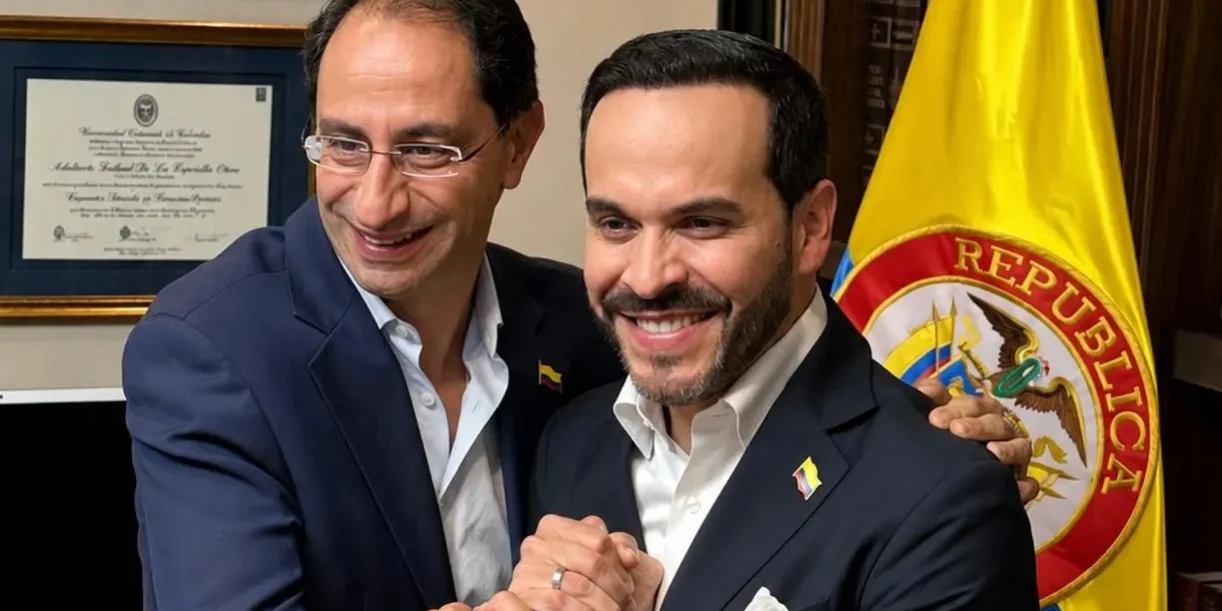
In Colombia, for example, the radical, Marxist, anti-American, pro-Hamas president Gustavo Petro, who severed trade, military, and diplomatic ties with Israel, was replaced by Abelardo de la Espriella—the “Tiger”—who immediately restored all of those ties, and more.
He recognized Israeli sovereignty over the Golan Heights and pledged to open a diplomatic office in Jerusalem. In my meeting with his vice president, José Manuel Restrepo, I learned that the vital supply of Colombian coal to Israel—which Petro had suspended—would soon resume, and that cooperation between the IDF and the Colombian military would be restored at the highest level. Israelis no longer need visas to visit the country.
Similar transformations are taking place throughout the region. In Venezuela, formerly one of South America’s most hostile regimes toward Israel, the U.S. capture of President Nicolás Maduro last January opened the door to the restoration of consular ties for the first time since 2009. In Chile, home to South America’s largest Palestinian population, the government of President Gabriel Boric accused Israel of committing genocide in Gaza and severed formal diplomatic ties. All of this was reversed by Boric’s successor, José Antonio Kast, who immediately appointed a new Chilean ambassador to Jerusalem. Similar developments have taken place in Bolivia and Honduras, where leaders who were once hostile to Israel have been replaced by presidents committed to the closest and warmest possible ties with the Jewish state.
All of these Latin American countries are following the lead of Argentina under Javier Milei, the most Zionist and pro-Jewish president in the world. Once an outlier, Milei now appears to be setting the pace for the region’s relations with Israel. But the greatest transformation will come only with a change of government in Brazil. The victory of Flávio Bolsonaro, son of the former president who remains imprisoned, over Luiz Inácio Lula da Silva, an extreme anti-Israel figure, in the elections to be held this October would effectively make South America the most Israel-friendly continent on earth.
These transformations have many causes, chief among them America’s renewed interest in South American politics after years of sustained neglect. Trump remains extraordinarily popular among the region’s growing right-wing and evangelical populations. Among those benefiting from this shift are Jews, who, in stark contrast to the fear and pessimism I repeatedly heard from Jewish leaders elsewhere in the world, report few instances of antisemitism and see a bright future for their communities in South America.
Yet the situation could change. With the arrival of a new president in the White House—whether isolationist or progressive—the pendulum of South American politics could swing once again toward Petro and Maduro. It is therefore essential that Israel act now to invest heavily—technologically and militarily—in South America and further solidify our new alliance. No matter who wins Israel’s coming elections, we must look not only eastward, away from Europe and toward India, but also southward, toward the Southern Hemisphere.
This article originally appeared in Hebrew in Israel Hayom on September 3, 2026.