The commercial and spiritual ties between India and Israel pale beside our shared strategic interests.
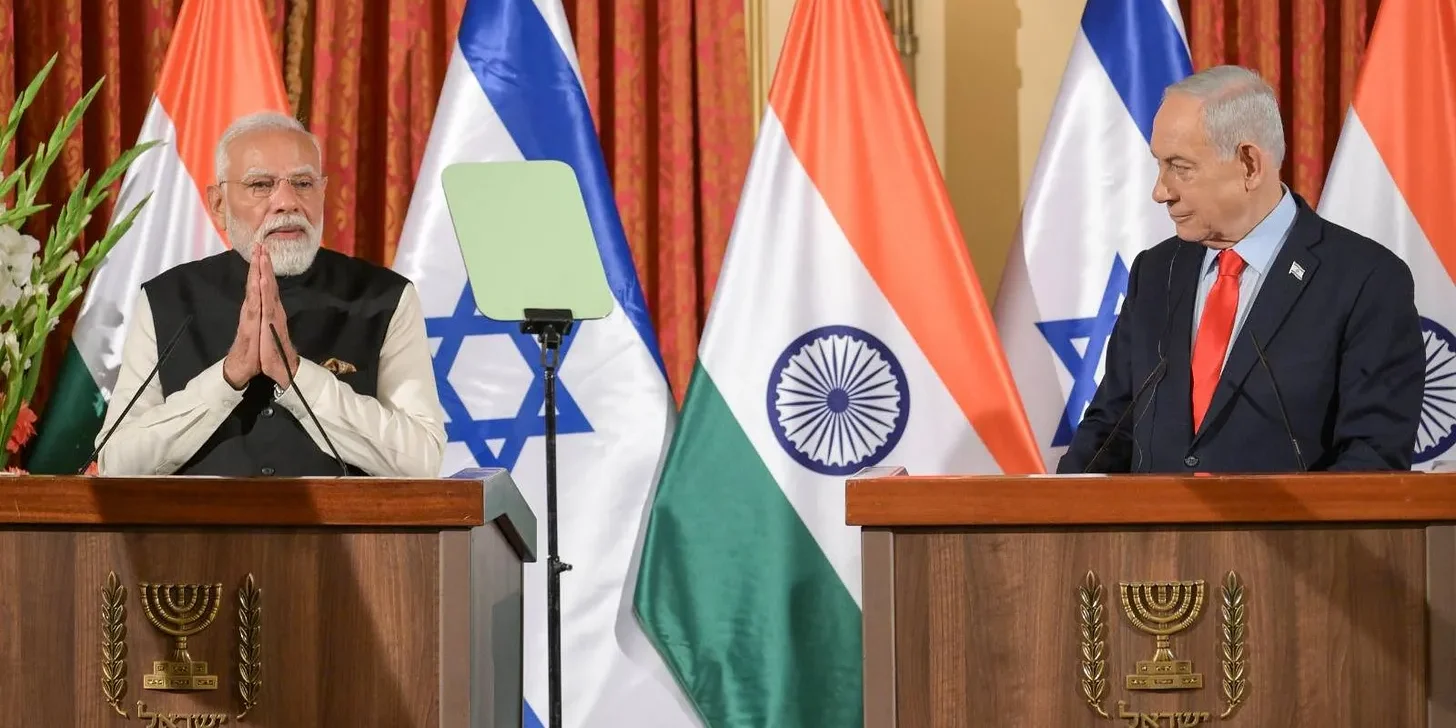
One cannot overestimate the importance of the second visit to Israel of Indian Prime Minister Narendra Modi. The fact that the democratically elected leader of the most populous nation on earth and one of its most powerful economies chose to come to us, a relatively minuscule country at this time—after one brutal war and the beginning perhaps of another—is nothing short of earthshaking. The simple question is: why? Why Israel and why now?
One answer is trade. With a volume of nearly $4 billion—exports and imports—annually and growing, Israel has become one of India’s largest Middle East trading partners. Much of that commerce is high-tech, without which Modi claims he cannot envision twenty-first-century India. And that’s just non-military trade. Defense deals have also skyrocketed, with India now accounting for more than 34% of all Israeli defense exports.
But India’s economic and security ties with Israel are only part of the reasons for Modi’s visit. Both countries face strategic threats from radical Islamists, many of them backed by China. Hindu nationalists and Jewish nationalists are natural allies.
Still, the commercial and spiritual ties between the two countries pale beside their shared strategic interests. At a time when large parts of the West are still accusing Israel of committing genocide in Gaza, India views Israel as a powerhouse that won historic victories over formidable enemies on multiple fronts. Modi sees an Israel closely allied with a United States poised to further degrade—if not eliminate it entirely—Iran’s power. Modi sees the possibility of a Middle East united under a renewed Pax Americana and linked by a strategic alliance stretching from the Jordan to the Ganges.
When Prime Minister Modi stands before the Knesset and expresses affection for, and deep sympathy with, Israel and declares “Am Yisrael Chai,” it is indeed an historic event. Irrespective who wins the next Israeli elections, every future government must build on that alliance and further Israel’s strategic pivot to Asia.
This article was adapted from a Hebrew version originally published in Ynet on February 26, 2026.