Now that the remains of our final hostage have been repatriated, the country’s eyes are fixed on either Iran or Gaza. It’s easy to forget one of the most fateful issues still facing us: the north. During the war, as many as 100,000 residents of the north were either evacuated from their homes by the state or fled for their safety further south. Thousands more remained and lived under almost daily rocket, mortar, and explosive drone fire. Some of the displaced have since returned, but a great many have not.
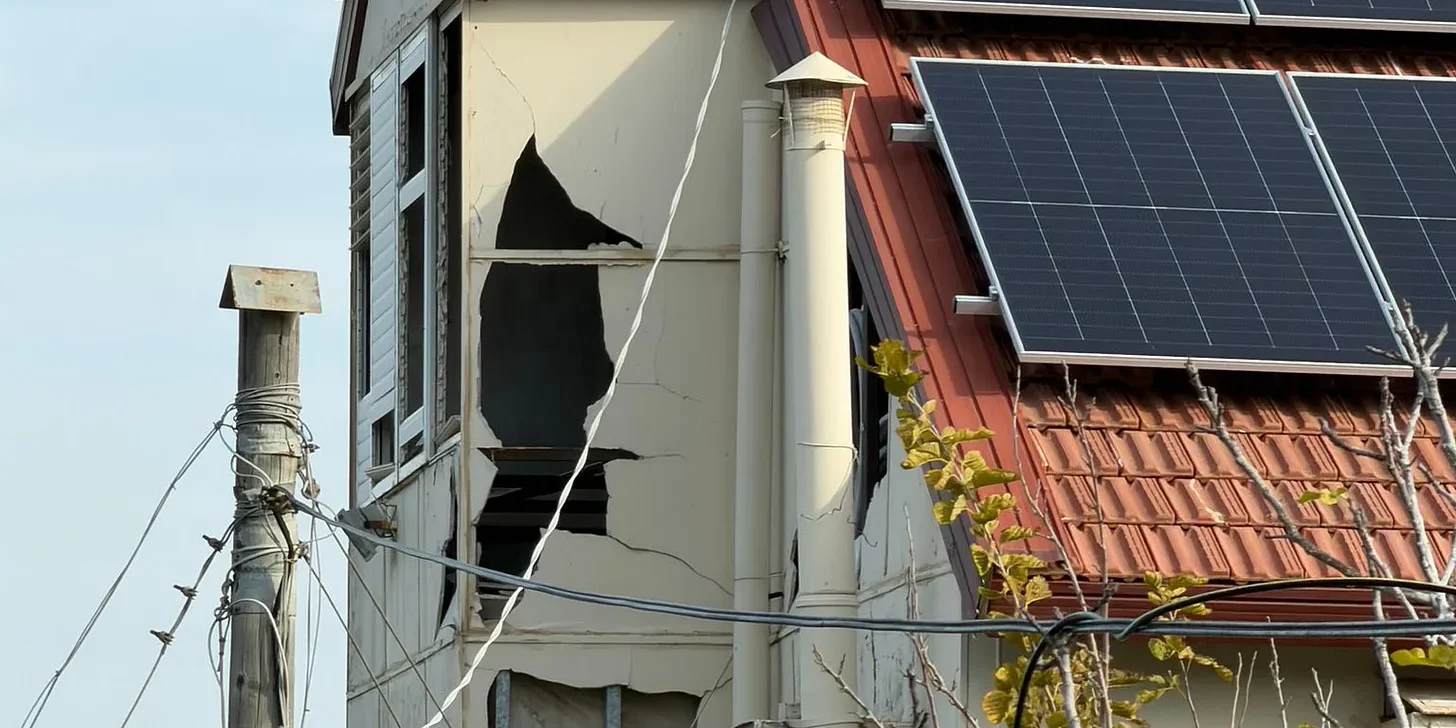
During a recent visit to the north, I was profoundly disturbed by the degree to which the area has yet to recover. In Metula, for example, where 60% of the homes were either partially or completely destroyed by Hezbollah rockets, hundreds of residents, especially renters, have not returned. An acute shortage of workers has prevented many homeowners from restoring their devastated houses. Metula activist Liat Cohen Raviv told me the city needed millions of dollars in repairs, including streets and sidewalks destroyed by our own tanks during the IDF’s border operations. Metula district head—Israel’s equivalent of a mayor—David Azulay blamed infighting between government ministers for the slow pace of recovery. Politics are threatening the very survival of the north.
The situation in Kiryat Shmona is far worse. Virtually half the city remains empty, making it a ghost town. Many of the residents evacuated during the war, especially the young people, learned to love the stimulating life in the coastal cities and have no desire to return to their less exciting and often dangerous hometowns. Some residents told me that soon hundreds of apartments will be bought by Arabs who, denied building permits by the government, cannot construct sufficient housing in their own villages. The result could be the loss of the Jewish character of Israel’s largest city in the Upper Galilee.

Having lived and worked in the north in my youth—as a cowboy on Kibbutz Gonen in 1973—I’ve always felt a deep attachment to the area. During the war, I founded the Israel Advocacy Group, which organized two delegations of displaced northerners to Washington for meetings in Congress and the White House back in 2024. IAG also facilitated the supply of vital medical equipment and concrete bomb shelters to the emergency squads resolutely defending the northern kibbutzim. I was privileged to briefly serve with them in summer 2024. Back then, the assumption was that, once the shooting stopped, the region would quickly rebound and even thrive. That predication has proven woefully premature.
For Israel, failure to revive the north will result in a moral and strategic disaster. Averting it requires urgent action. Not only must funding be made available for rebuilding the area but also for creating new infrastructure, transportation, and jobs.

In addition to witnessing depressing scenes and hearing bleak testimonies in the north, I also encountered inspiring sources of hope. I attended the inauguration of HUBayta, a multi-story high-tech, startup, and innovation center in the Upper Galilee. Hundreds of young entrepreneurs received encouragement from President Herzog and district leaders who praised their commitment to revitalizing the north. Later, I stopped in at the Northern Spirit, a boutique liquor and wine tasting room on an international level located—defiantly, it seemed—in Kiryat Shmona. One of the young co-owners, Matan Harari, shared his vision of opening a high-end distillery on Kibbutz Kfar Blum. Stopping, lastly, at that kibbutz’s Pastoral Hotel, I was delighted to find it fully booked—albeit only with Israeli tourists—for a weekend of French music.
The north is rich with inspired and talented people dedicated to the region’s future. The descendants of the Galilee’s original Zionist settlers unite with new immigrants in forming a resilient cadre dedicated to preserving and revitalizing their homes. The state must not abandon them but, on the contrary, must join them in realizing their vision. If, in English, a confused person becomes “disoriented”—literally meaning loses the East—in Hebrew, that same bewildered individual “ma’abed et haTzafon”, loses the North. Israel cannot afford to be baffled. Israel must not lose the north.