Prior to Wednesday at 3 a.m. the majority of Israelis supported a war they hoped would result in a fundamental alteration of their reality. The ceasefire seems to have smashed those hopes.
This piece was published last Thursday in The Free Press. Since then, the challenges facing Israel have only multiplied. The American mainstream media, above all The New York Times, have accused Israel of first dragging the United States into a disastrous Middle East war and then of undermining the chances of peace between the United States and Iran by attacking Hezbollah in Lebanon. After the failure of those negotiations in Pakistan, President Trump has said that he doesn’t care if there is no deal.
While no deal is arguably better than a bad deal that would lift sanctions on the Islamic Republic, enable it to continue to enrich uranium, and support terror, the current situation leaves Iran with enough highly enriched material to produce eleven nuclear bombs. All this, together with the intelligence estimates that concluded that Iran retained thousands of ballistic missiles and launchers.
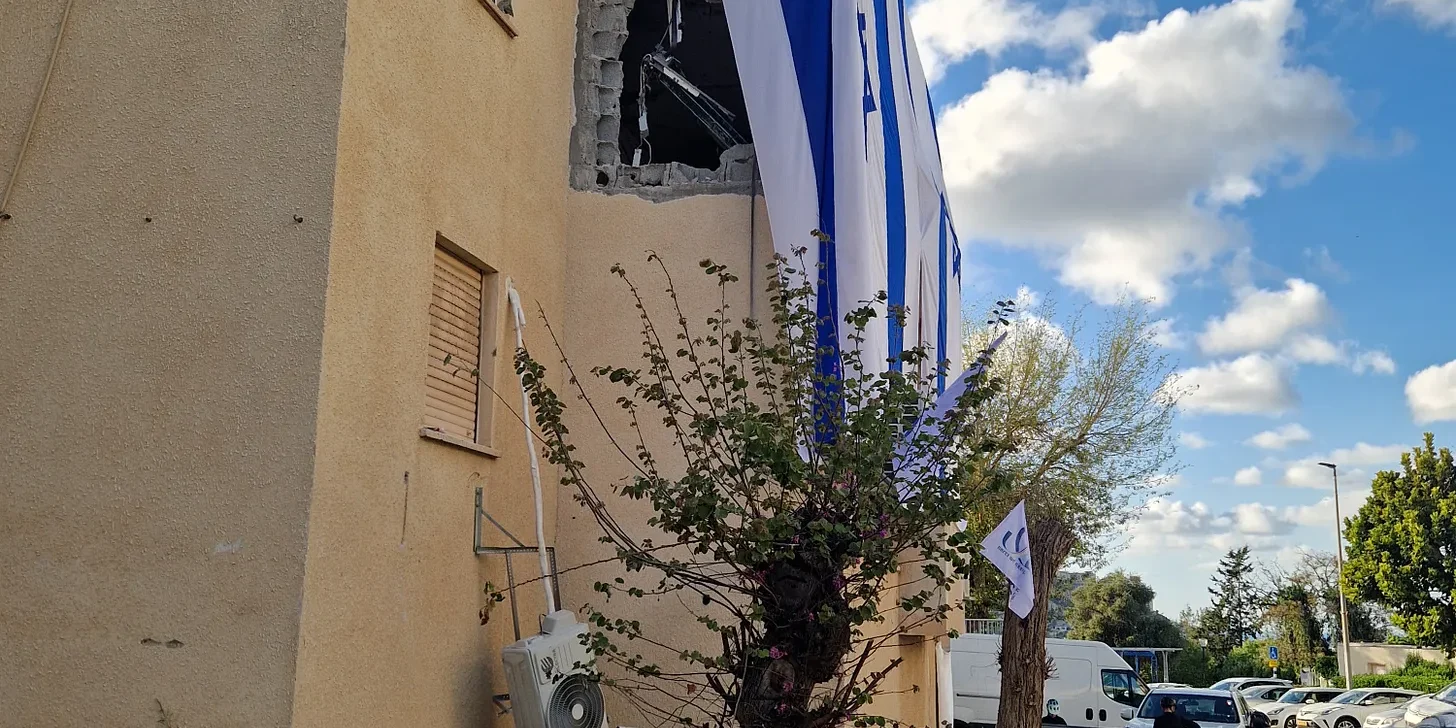
In the north, meanwhile, Hezbollah continues its daily rocket and drone attacks, terrorizing millions. The night after the ceasefire, Hezbollah fired a rocket at the port of Ashdod, sending much of central and southern Israel into bomb shelters. Nevertheless, the President has asked Israel to dial down its counterstrikes; pressure from Washington to agree to a total ceasefire is likely to increase. Without a palpable Hezbollah defeat, the displaced citizens of the north will not return.
At this stage it seems highly unlikely that President Trump, who continues to declare an historic victory over Iran, will renew military operations. This leaves Israel facing some of the most daunting strategic hurdles in our history. The depression felt by a great many Israelis on the day of the ceasefire now appears to have been fully justified.
What Does the Ceasefire Mean in Israel?
April 9, 2026
For a great many Israelis, the hardest moment of the 40-day war with Iran—harder than the thousands of rockets and missiles fired at the country and the deaths of 42 of our citizens—came with the ceasefire. Prior to that announcement, at 3 a.m. on Wednesday morning in Jerusalem, the vast majority of Israelis supported a war they hoped would result in a fundamental alteration of their reality. The ceasefire seems to have smashed those hopes.
Since Israel’s War of Independence in 1948, Israelis have dreamed of a lasting end to fighting with their neighbors, and of the advent of permanent peace. Successive generations cherished the song “Yes, It’s Possible,” written by the Palmach self-defense force veteran Haim Hefer in 1948, which enshrined their longing:
Yes, it’s possible. Yes, it’s possible
That it will simply happen tomorrow.
It’s possible that in the jeep passing by,
The boys will roar, “It’s over.”
“It” was the Israeli-Arab conflict, and the “boys,” soldiers announcing its end. That vision appeared to be realized with the signing of peace treaties with Egypt and Jordan, in 1979 and 1994, only for the Israeli-Arab conflict to be supplanted by an even more intractable Israeli-Palestinian conflict. And by the time the Palestinian issue was sidestepped by the Abraham Accords in 2020, it was already overshadowed by Israel’s multifront, existential struggle with Iran. The idea that someday soldiers in jeeps would proclaim peace with the Islamic Republic was beyond what even the most optimistic Israelis could hope or imagine.
That is, until this war. After the brutal repression earlier this year, millions of Iranians appeared poised to rise up against their totalitarian rulers, reclaim their freedom, and restore their fraternal, prerevolutionary relationship with Israel. By insisting on Iran’s “unconditional surrender” and openly calling for regime change, and by forbidding Iran from ever producing nuclear weapons or long-range ballistic missiles and from supporting terrorist proxies, President Donald Trump committed to ending the conflict.
We believed that Hezbollah was humbled by Israel’s invasion of southern Lebanon in 2024, and that Iran was rendered defenseless by last summer’s Rising Lion and Midnight Hammer operations by Israel. The launching of Israel’s Roaring Lion and America’s Epic Fury operations on February 28 heralded the creation of a profoundly different Middle East. With Iran defanged, the same American president who forged the Abraham Accords could proceed to make peace between Israel and Lebanon, Syria, Saudi Arabia, and maybe even an ayatollah-free Iran. A revived Pax Americana would stretch from the Eastern Mediterranean to the banks of the Ganges.
We told ourselves such radical transformations would transpire not within years, but weeks. Though Israelis were aware of the president’s tendency to change course, sometimes dramatically, within hours, there was little basis for assuming he might vis-à-vis Iran. Faced with the combined juggernaut of the Israel Defense Forces (IDF) and U.S. armed forces, the Iranian regime would swiftly buckle. Eliminating Supreme Leader Ali Khamenei and his hard-line henchmen would facilitate the emergence of more practical Iranian leaders. Buffeted by the “help” that President Trump promised “was on its way,” Iranian protesters would swiftly rise up. Many Israelis hoped the new government of Iran would embrace the country’s exiled crown prince, Reza Pahlavi, who extended his hand “in partnership to our neighbors from Israel and the Arab states.”
But such expectations quickly proved Pollyannaish. While military planners in both countries reportedly accounted for the possibility that Iran would block the Strait of Hormuz and send oil prices soaring and stock markets plummeting, the eventual extent of the danger clearly eluded American and Israeli policymakers. Rather than being degraded, Hezbollah demonstrated a surviving ability to pummel Israel’s north. General Dan Caine, chairman of the Joint Chiefs of Staff, would claim that Iran’s ballistic missile launches had been reduced by almost 90 percent even while barrages struck across the Middle East and beyond. Huddling with my family in our reinforced safe room throughout the war, I repeatedly quipped, “Someone in Tehran didn’t get the memo.”
Still, in the first weeks of the war at least, there seemed little reason to doubt the administration’s commitment to achieving its basic goals. Even after March 24, when the president declared that “we’ve won this war—this war has been won,” Israelis acted as if their time for striking Iran was unlimited. When I spoke on Israeli TV news about how Trump was already building a victory narrative and would soon call an end to Operation Epic Fury, my co-panelists, most of them ex-generals, scoffed.
Ultimately, the passing of Israel’s “It’s possible” moment was less a product of Iranian resilience and the resurgent Hezbollah threat than of differing interpretations of victory. For the Trump administration, triumph resides in the number of Iranian ships sunk by the U.S. Navy, the nuclear facilities and ballistic missile factories destroyed, and the list of generals and clerics eliminated. These achievements, according to Defense Secretary Pete Hegseth, represent “a historic and overwhelming victory on the battlefield.” To those Americans firmly supportive of Trump and not old enough to remember the red herring body counts of the Vietnam War, such tactical statistics could be mistaken for strategic accomplishments. The administration can claim credit for changing Iran’s regime, without acknowledging that the country’s latest leaders might be more militant than the prior ones.
In the Middle East, victory is defined not by an army’s performance but by its enemy’s ability to survive. For the Iranian regime, like Hamas and Hezbollah, victory is established when the successors of assassinated leaders can emerge from the rubble and flash a “V” sign. In Middle East wars today, there are no Mount Suribachi moments with U.S. Marines hoisting a battlefield flag or Israeli paratroopers reporting, as they did in 1967, “the Temple Mount is in our hands.” Winning is achieved not in days or weeks but in years and decades during which radical regimes and their proxies steadily restock their arsenals and renew their terror campaigns. Israelis now overwhelmingly believe Iran is poised to do just that.
In his address to the nation Wednesday night, Prime Minister Benjamin Netanyahu tried to emulate President Trump in claiming a historic success over Iran: “We have shaken its foundations. We have crushed it. . . . We have dramatically changed the face of the Middle East in Israel’s favor.” But Israelis are too well versed in Middle East realities to be swayed. We know that, despite the superhuman efforts of our troops and pilots and the immense damage they have inflicted on Iran’s offensive capabilities, the war has secured none of its strategic goals.
One of those objectives, Israelis recall, was the cessation of Iranian support for its terror proxies, but that has emphatically not been secured in Israel’s north. For the roughly two million Israelis languishing under Hezbollah rocket fire, the war is far from over. It must continue despite Iranian and international demands and mounting American pressure for a ceasefire in Lebanon. Failure to defeat Hezbollah means that Israelis will never again live in huge parts of our own country. For all of us, the threat is immediately, palpably, existential.
Many Israelis would be willing to endure another six weeks—and more—of sleepless nights, school-less days, and hours in our safe rooms to bring about even part of our vision of regional peace. Most would not be crestfallen if the current ceasefire fails and the campaign to defeat Iran in Middle Eastern terms resumes. The tens of thousands of IDF reservists who have already served hundreds of days in combat would readily serve hundreds more. Throughout, we would cling to the belief that “it’s possible”; that someday a jeep will pass by with soldiers shouting, “It’s over.”
This article originally appeared in The Free Press on April 9, 2026.