Israel must once again adopt the slogan — ‘No deal is better than a bad deal.’
More than a decade ago, at the height of President Obama’s efforts to negotiate a nuclear agreement with Iran, Israel adopted the slogan, “No deal is better than a bad deal.”
A bad deal, Israeli officials explained, was one that failed to dismantle Iran’s nuclear facilities, strictly limit its intercontinental missile capability, and prevent it from producing a warhead. A bad deal permitted Iran to develop more rapidly-enriching centrifuges and, through sanction relief, continue to fund terror throughout the Middle East and the world.
A good deal, by contrast, guaranteed that Iran could never make nuclear weapons and never again threaten its neighbors—above all Israel—with annihilation.
Today, as the Trump administration seeks to negotiate an end to the Iran war and reopen the Strait of Hormuz to international shipping, Israel must adopt the same principle of “No deal is better than a bad deal.”
A good deal is one that achieves the goals set out by the U.S. and Israel at the war’s outset. No further uranium enrichment in Iran, no long-range ballistic missiles, and no support for terrorist proxies. The 450 kilograms of highly enriched uranium still located in Iran must either be shipped out to another country or diluted into far less dangerous fuel. Later, after Iran blockaded the Strait, a fifth objective was added demanding the restoration of free navigation through Hormuz.
Recent press reports claim that Washington is contemplating reducing these demands of Iran and increasing its incentives. Such reports may be inaccurate, yet the dangers of a bad deal with Iran still cannot be ruled out.
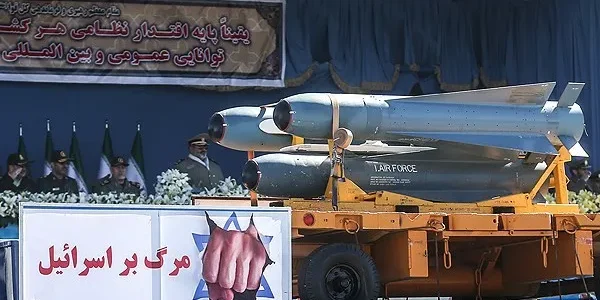
A bad deal with Iran is one that removes the highly enriched uranium from Iran and reopens the Strait of Hormuz but at the price of sanctions relief. A bad deal is one that enables Iran to continue funding and arming Hamas, Hezbollah, and the Houthis while building an impenetrable ballistic missile shield around its rebuilt nuclear facilities. A bad deal merely freezes Iran’s enrichment activities for, say, fifteen years but preserves Iran’s right to enrich.
A regime that thinks not in terms of months and years, but decades, will patiently wait out the fifteen-year freeze and one day emerge as a nuclear power. By concluding a bad deal, the Islamic Republic will rebuild all that it lost in the war and once again oppress its people, destabilize the region, and threaten Israel’s existence. Ultimately, it will endanger the United States.
Obama eventually signed a bad deal with Iran, the JCPOA. In exchange for delaying parts of its nuclear program for seven to fifteen years, Iran received as much as $100 billion and used that money to expand its hegemony across the Middle East. It produced thousands of ballistic missiles along with the mines and attack craft necessary for closing the Strait. Iran’s proxies were vastly strengthened and empowered to launch the war that began not in February but in October, 2023.
Israel must do everything in its power to once again prevent a bad deal. Admittedly, our ability to oppose any policy of the current administration is limited but, at the very least, we must make our position clear. A bad deal, Israel must stress, will rival that of the JCPOA and potentially prove even worse. Israel must declare that the status quo of strangling the Iranian regime through sanctions and blockades is preferable to an agreement that lets the regime survive and rebuild. No deal is once again better than a bad deal.