One view of the ceasefire spells strategic disaster, the other, hope. Whichever perspective, Israel must prepare for the ongoing confrontation with Iran and its proxies.
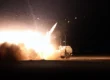
There are two ways of looking at the missiles fired by Iran at Israel on Wednesday morning after the United States announced a ceasefire. One way spells strategic disaster for the State of Israel. The other holds out hope.
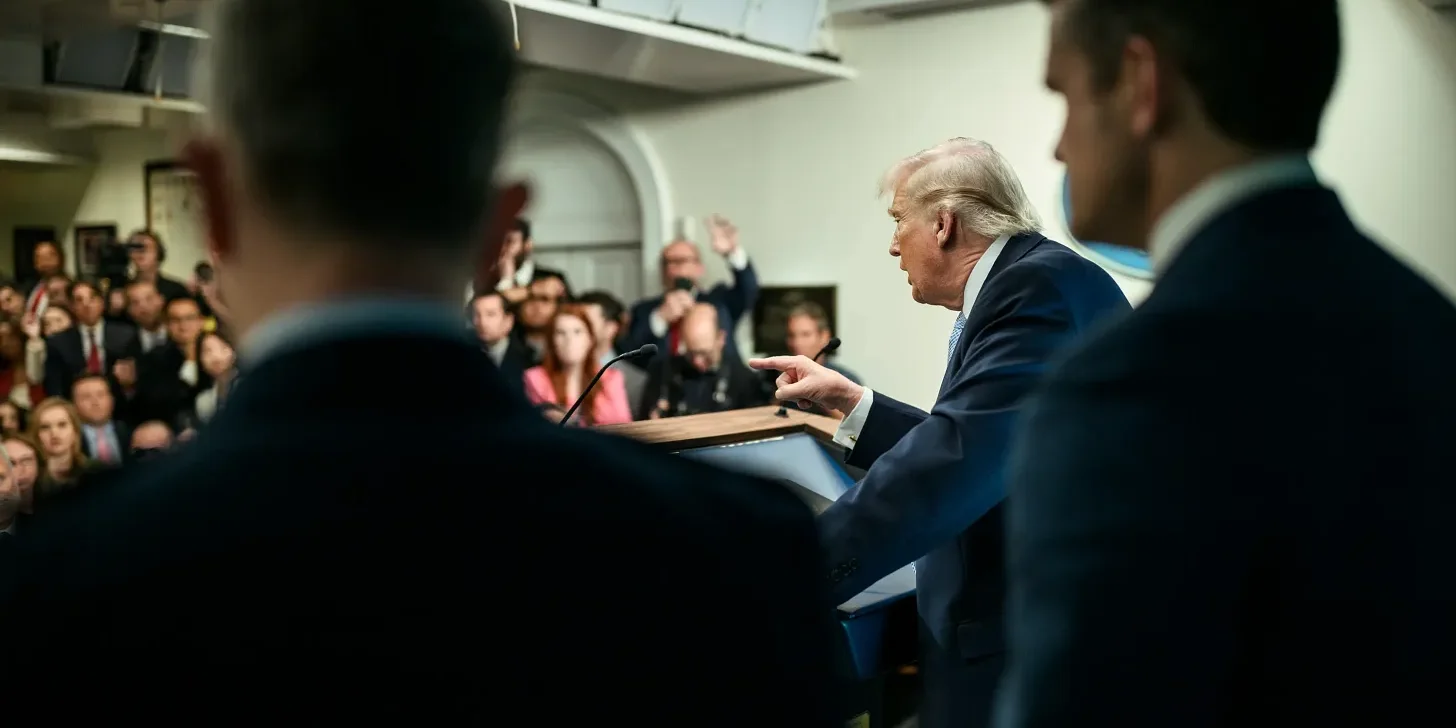
The disaster scenario is painfully clear. After pledging to bomb Iran’s strategic infrastructure and energy assets and destroy its civilization, President Trump backtracked and agreed to a two-week ceasefire that left Iran in control of the Strait of Hormuz along with ballistic capabilities. Their regional proxies are far from eliminated. The regime keeps its stockpile of over 970 lbs of highly enriched uranium, enough to make eleven nuclear bombs, and retains the right to enrich.
In such a situation, the United States is unlikely to have the leverage to achieve all or even some of its original war goals in the talks. Given public opinion in the U.S., it is difficult to imagine America renewing the war after the two-week truce.
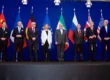
Rather, the Americans are likely to find themselves negotiating Iran’s terms for peace, including guarantees against future attacks against the Islamic Republic and the withdrawal of U.S. forces from the Middle East. At most, a deal could be reached in which, in exchange for exporting the enriched stockpile abroad, Iran would receive sanctions relief. That windfall, together with massive Russian and Chinese aid, will enable Iran to emerge from this war more powerful than ever. Its leaders will not only rebuild its ballistic capabilities but rush to acquire nuclear weapons.
The result will be the end of the dream of a regional peace under a revived Pax Americana. The Gulf States, humiliated and fearful, will seek to reconcile with Tehran. There will be no new signatories to the Abraham Accords. The Middle East will be plunged into a nuclear arms race. Having already lost most of the Democratic Party in the U.S., and the expanding ranks of the isolationist Republicans, Israel will also be abandoned by administration officials who, according to a recent New York Times exposé, blame Israel for dragging Trump into a disastrous war.
But there is also a hopeful reality in which Trump is using the two-week truce to rotate and replace his exhausted troops who have been serving in a war zone and to prove, once again, Iran’s intransigence. There is the hope that the President will not give in to the Iranian demand to impose a ceasefire on our northern front as well and that Israel can restore basic security to the Galilee. The hopeful scenario holds that, even if it survives this war, the Iranian regime has been so undermined that it will eventually collapse and be replaced by a peace-seeking government.
Whichever scenario or combination of scenarios ensues, Israel must prepare for the ongoing confrontation with Iran and its proxies. This means stabilizing our new borders—the Yellow Line in Gaza and the Litani River in Lebanon—and giving our reserves a desperately needed rest. It means strengthening our relations with the United States while also cultivating new alliances globally. It means healing our internal rifts, above all the Haredi controversy which is tearing us apart. And we must harness our technology to produce new ways of defending our skies and our land. We can never again afford to become complacent about the immense threats facing us.
We must confront the future, uncertain and hazardous as it might be, refreshed, re-armed, and united.